Wednesday, August 25, 2021

Thinking Activity on Future of Postcolonial Studies:Globalisation and Environmentalism


Hello Readers…👋.

As you all know that I am a student of department of English under professor Dilip barad. So This is what we are doing in Department, so The major object of study into department to Encourage student to write something into blog with Express his own idea to share with people Because blogger is one king of platform to find own thought Process.


i) Summaries both articles

Let us Quickly come to The two Articles that we have studied under Dilip sir.

Article 1 : Conclusion: Globalisation and The future of post colonial studies


                         Introduction 

Before, we move on to the Article Let me give basic information about what Globalisation is.


  • Economics

  • Political science

  • Privatisation

  • Free choice

Post colonial critics read the American’s Mind.

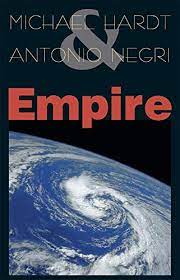
One of The books by Michel Hardt is about the  ‘Empire’ of the U.S.A.

                   Michael Hardt

Michael Hardt is an American political philosopher and literary theorist. Hardt is best known for his book Empire, which was co-written with Antonio Negri. It has been praised by Slavoj Žižek as the "Communist Manifesto of the 21st Century".

Empire is a book by post-Marxist philosophers Michael Hardt and Antonio Negri. Written in the mid-1990s, it was published in 2000 and quickly sold beyond its expectations as an academic work.Further Information in the Link

As we know that Our suspense is Problematic. Privatisation is faulty. There is no money. Private corporations are empty. MNCS means Multinational company Also, The point is Related with Al-Qaeda. 

What does Al- Qaeda mean?

Al-Qaeda is a militant Sunni Islamist multi-national organization, which is widely regarded as terrorist. It was founded in 1988 by Osama bin Laden, Abdullah Azzam, and several other Arab volunteers during the Soviet–Afghan War. Al-Qaeda operates as a network of Islamic extremists and Salafist jihadists.Click Here. 
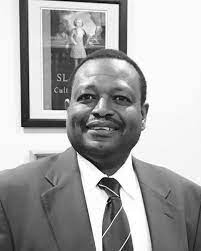


Simon Gikandi 

Simon E. Gikandi is a Kenyan Literature Professor and Postcolonial scholar. He is the Robert Schirmer Professor of English at Princeton University. He is perhaps best known for his co-editorship of The Cambridge History of African and Caribbean Literature.Click Here for further Information about Simon Gikandi.


Simon Gikandi gives positive and Negative aspects of Globalisation.

 If we see one aspect of the American Empire so They want to do as a major Judge of the world, that's why America has a problem with china. The people of China doesn't want to accept the things of china. That's the reason both are fighting for Eachother. Both of the country's major figures are using Rhetorical language to attract people.


Samuel Hungitons

Samuel Phillips Huntington was an American political scientist, adviser and academic. He spent more than half a century at Harvard University, where he was director of Harvard's Center for International Affairs and the Albert J. Weatherhead III University Professor Wikipedia Source click


Samuel Huntigtons ‘Clash of Civilization’

  • Islamophobia is the fear of hatred of or prejudice against the Religion of Islam or muslim in Genral, Especially when seen as a Geopolitical force or a source of terriorism.

  •  Jews and Moors they were banished from the catolic spain in 1492 that makes tension on Christian identity.

  • Our Important point for Muslim they were not like Terrorist but as well as they were working as Dilligent Youth.


However, Three things are more significant for Understanding.


  • Privatisation

  • Globalisation


  • Liberalisation


P.sainath ~ 

Palagummi Sainath is an Indian journalist and author of the book Everybody Loves a Good Drought. He has been actively campaigning, throughout his career, over the issues leading up to the farmers' agitations. He backed the Samyukta Ekta Morcha that leads the farmers' agitations in India.


  • Market Fundamentalism’

It is related to religion. Also, the idea of fundamentalism is to cut the national religion. Although, Market has Difficult identity. Let us see one Article for that Click Here 


  • ‘And Then there was the market’ By p.sainath.


The last years of the ’90s saw food ‘surpluses’ piling up in South Asia. It wasn’t just India with 44 million tons. Even Pakistan and Bangladesh had their moments. At one point these countries together accounted for a grain surplus of well over 50 million tons.

Remarkable since these three nations account for half the world’s hunger.

More remarkable since the paradox draws very little debate.

Even a call for discussing this amounts to demanding ‘obsolete’ practices of the interventionist state. If we hadn’t mucked around trying to get the state to play God for 50 years, none of this would have happened. If only we had got it right and let the market play God instead.

Well, we sort of did that for the last ten years. But facts count for little in the Age of Incantation.

Welcome to the world of Market Fundamentalism. To the Final Solution.click Here seminar


Niall Campbell Ferguson is a Scottish-American historian and the Milbank Family Senior Fellow at the Hoover Institution at Stanford University.click Wikipedia

He says that 

  • Globalisatio is very harmful.

  • The Education of Children is bad.

  • Defending Civilisation.


Edward said 

Edward Wadie Said was a professor of literature at Columbia University, a public intellectual, and a founder of the academic field of postcolonial studies. A Palestinian American born in Mandatory Palestine, he was a citizen of the United States by way of his father, a U.S. Army veteran. Source of wikipedia click Here


Conclusion: The Future of Post colonial studies

Narrative on sardar sarovar Dam, Narmada River

Displacement 

There are two major things that some are coming for Rural area and some are coming from the Urban so as perspective of the urban person to make develop their village but the when the some urban are cutting trees to make their own Benefit at that time there are so many Rural person live always against towards development. But the Problem is to see that while some are giving promises to people that they are controlling natural things like Narmada. So My point is that it’s all about Rhetorical language. When the Election comes at that moment they are just giving some water to village people that’s why they are always against saving the Narmada. As we know, There are Gujarat,Madhya Pradesh and Rajasthan. Who were those people against the rule of the Government?


The story Of Reva

The film is based on Gujarati author Dhruv Bhatt.
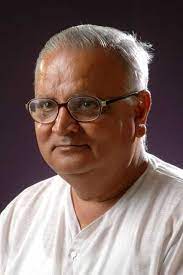
Dhruv Bhatt is a Gujarati language novelist and poet from Gujarat, India.For Further Information click here.

The film is based on Gujarati author Dhruv Bhatt's 1998 Gujarati novel Tatvamasi. ... The directors found the number of characters and the philosophy of the novel …

As we have already seen the film Reva and might have gone through the Novel Tatvamasi. Which is based on the Narmada as the center of the film, but we can think that it is not quite true because in that movie there has been used things like spices. So The Movie is about the spice of The Narmada. If we will have an opportunity to critique this, we can throw more light on it. How people are facing the problem, while The government is working like imperialism because whenever people will have water so Government can’t provide water to Rural people for farming. So This kind of Globalisation is harmful for us as countries people.


Ground Reality| Media's Perspective

Some can make shade for you if the shade is too small. So how can people live in the shade?


P. Sainath said = Cuts across Religion also, it is a construction company, do that, companies keep on telling, they are selling this kind of mobility, laptop etc. whoever Government people, you have to remain part of Corporate.


What is The Future of Post Colonial studies?

As we know  that Now Afghanistan & Taliban, China,Russia,Pakistan and America and India.

But The point is about Taliban people, how they blindly follow the religion, how women have problems taking Education as well as always wearing the Black color costume. The major things that The mike on the Temple. The Rules of Tallak.


  • Scrap Police vs Eco friendly

     Being Eco Friendly. It is about

  •   Privatisation

  •   Policy

  •  Favor to Company


  • Red Indians Colonized 

                         By European in America


During the colonial period, Native Americans had a complicated relationship with European settlers. They resisted the efforts of the Europeans to gain more of their land and control through both warfare and diplomacy. But problems arose for the Native Americans, which held them back from their goal, including new diseases, the slave trade, and the ever-growing European population in North America.Click Here to More Reading


  • Globalisation 

  • Development of Artificiality

How was Human being Born on The Earth


  • Ecology As a Hero

  • Medieval time of God

  • Eco feminism


Sherry b.ortner 

    Sherry Beth Ortner is an    American cultural anthropologist and has been a Distinguished Professor of Anthropology at UCLA since 2004.Click here 


Is Female to Male as Nature Is to Culture? 

Much of the creativity of anthropology derives from the tension between two sets of demands: that we explain human universals, and that we explain cultural particulars. By this canon, woman provides us with one of the more challenging problems to be dealt with. The secondary status of women in society is one of the true universals, a pan-cultural fact. Yet within that universal fact, the specific cultural conceptions and symbolizations of women are extraordinarily diverse and even mutually contradictory. Further, the actual treatment of women and their relative power and contribution vary enormously from culture to culture, and over different periods in the history of particular cultural traditions. Both of these points – the universal fact and the cultural variation constitute problems to be explained.Click Here to read Article


ii) Include important quotes from both articles in your summary

  • Market fundamentalism destroys more human lives than any other simply because it cuts across all national, cultural, geographic, reli- gious and other boundaries. It's as much at home in Moscow as in Mumbai or Minnesota. A South Africa - whose advances in the early 1990s thrilled the world - moved swiftly from apartheid to neo-liberal- ism. It sits as easily in Hindu, Islamic or Christian societies. And it contributes angry, despairing recruits to the armies of all religious fundamentalisms. Based on the premise that the market is the solu- tion to all the problems of the human race, it is, too, a very religious fundamentalism. It has its own Gospel:

  • In contrast to imperialism, the Empire establisheş no territorial center of power and does not rely on fixed boundaries or barriers. It is a decentered and deterritorializing apparatus of rule that progressively incorporates the entire global realm within its open, expanding frontier Empire manages hybrid identities, flexible hierarchies, and plural exchanges through modulating networks of command. The distinct national colors of the imperial map of the world have merged and blended in the imperial global rainbow

                                           . (Hardt and Negri 2000: xiii-xii)

         The Gospel of St. Growth, of St. Choice... (2001: n.p.)

  • "Globalization is.just another name for submission and domination', Nicanor Apaza, 46, an unemployed miner, said at a demonstration this week in which Indian women ... carried banners denouncing the International Monetary Fund and demanding the president's resigna- tion.'We've had to live with that here for 500 years, and now we want to be our own masters.'

  • Climate change, refracted through global capital, will no doubt accentuate the logic of inequality that runs through the rule of capital; some people will no doubt gain temporarily at the expense of others. But the whole crisis cannot be reduced to a story of capitalism. Unlike in the crises of capitalism, there are no lifeboats here for the rich and the privileged (witness the drought in Australia or recent fires in the wealthy neighborhoods of California).

(Chakrabarty 2009: 221)

  • All the features of primitive accumulation that Marx mentions have remained powerfully present with capitalism’s historical geography until now. Displacement of peasant populations and the formation of a landless proletariat has accelerated in countries such as Mexico and India in the last three decades, many formerly common property resources, such as water, have been privatised (often at World Bank insistence) … alternative (indigenous and even, in the case of the United States, petty commodity) forms of production and consumption have been suppressed. Nationalised industries have been privatised. Family farming has been taken over by agribusiness. And slavery has not disappeared (particularly in the sex trade).

  • The great range of actual measures carried on under the label of glob- alization .. were not those of integration and development. Rather they were the processes of imposition, disintegration, underdevelop- ement and appropriation. They were of continued extraction of debt servicing payments of the third world; depression of the prices of raw materials exported by the same countries; removal of tariff protection for their vulnerable productive sectors; removal of restraints on for- eign direct investment, allowing giant foreign corporations to grab larger sectors of the third world's economies; removal of restraints on the entry and exit of massive flows of speculative international capital, allowing their movements to dictate economic life; reduction of State spending on productive activity, development and welfare; privatiza- tion of activities, assets and natural resources, sharp increases in the cost of essential services and goods such as electricity, fuel, health care, education, transport, and food (accompanied by the harsher depression of women's consumption within each family's declining consumption); withdrawal of subsidized credit earlier directed to starved sectors; dismantling of workers' security of employment; reduction of the share of wages in the social product; suppression of domestic industry in the third world and closures of manufacturing firms on a massive scale; ruination of independent small industries; ruination of the handicrafts/handloom sector; replacement of subsis- tence crops with cash crops; destruction of food security. 

  • (Research Unit for Political Economy, 2003: n.p.)


iii) Illustrate your understanding of these concepts by giving examples its portrayal in literature, films, ads, documentaries and real life events

In our Discussion, we saw so many examples related to our concern about the topic of Globalisation.


As a Example : The Reluctant Fundamentalism ( Film Screening)
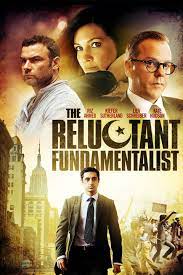

 The Reluctant Fundamentalist is a 2012 political thriller drama film directed by Mira Nair. It is based on the 2007 novel of the same name by Mohsin Hamid.Click here Further 


Example: The Attacks of 26\11
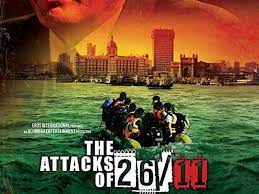
Ten terrorists travel to India and launch several attacks at various places in South Mumbai. Subsequently, the Mumbai Police arrests Ajmal Kasab, one of the terrorists.Video Regarding the Terrorist attack


Example: Sherni (film)

Nature and man fight against a forest officer as she and her team of locals and trackers attempt to capture a disturbed tigress.Video Trailer


Chardham yatra Project

Char Dham National Highway, is an under construction two-lane (in each direction) express National Highway with a minimum width of 10 metres in the Indian state of Uttarakhand. The under construction highway will complement the under-construction Char Dham Railway by connecting the four holy places in Uttarakhand states namely Badrinath, Kedarnath, Gangotri and Yamunotri.The project includes 900 km national highways which will connect whole of Uttarakhand stateVideo link


Example: Chakravyuh


Chakravyuh is a 2012 Indian Hindi-language political action thriller film directed by Prakash Jha starring Arjun Rampal in the lead role with Abhay Deol, ...click for video


Also, There are several examples like a sonali cable, Rang De basanti, Ghayal Once again and madari.

*Examples:


  • ‘Empire’ By Michael hardt & Antonio Negri.

  • Modernity of Language: Dimensions of Globalization’ by Arjun Appadurai

  • Globalization and the Claims of Post colonization’ by Simon Gikandi

  • Racism’ & ‘Nationalism’ by Etinne Balibar 

  • 'Clash of civilizations’ by Samuel Huntigton 

  • ‘And Then There was Market’ by P. sainath


*Conclusion*

So, Now we know that The development of a country is all about privatization. Who are just using people as Toy. Also, The Government is a puppet of private companies Like Reliance , Essar, peppsi, Coca cola etc.


Everything is dependent on the Government. so, the Government is dependent on Companies. Like a 


MNC: Multi National company


IMF: The International Monetary Fund 


RIL: Reliance Industries Limited


But, the Government is dependent on Money.so the Point present that everything is ⏭Money⏮ centric.


                                                                                                          Thanks😊


Monday, August 2, 2021

Salman Rushdie's Midnight Children & Film Adaption

                           Introduction

Sir Ahmed Salman Rushdie[a] FRSL (born 19 June 1947) is an Indian-born British-American novelist and essayist.[3] His work, combining magical realism with historical fiction, is primarily concerned with the many connections, disruptions, and migrations between Eastern and Western civilizations, with much of his fiction being set on the Indian subcontinent.


His second novel, Midnight's Children (1981), won the Booker Prize in 1981 and was deemed to be "the best novel of all winners" on two occasions, marking the 25th and the 40th anniversary of the prize. His fourth novel, The Satanic Verses (1988), was the subject of a major controversy, provoking protests from Muslims in several countries. Death threats were made against him, including a fatwā calling for his assassination issued by Ayatollah Ruhollah Khomeini, the Supreme Leader of Iran, on 14 February 1989. The British government put Rushdie under police protection.

Also, Today we are going to discuss about the Novel vs film Adaption that which are the characters and style  quite different from both the things..


1. Narrative technique (changes made in film adaptation - for eg. absence of Padma, the Nati, the listener, the commenter - What is your interpretation?)

 A film adaptation of Salman Rushdie’s controversial novel Midnight’s Children may not be screened in India due to its sensitive political content, according to its director, though others point to a simple lack of commercial interest.

The film’s Canadian-Indian director, Deepa Mehta, blamed “insecure politicians” for its failing to attract a distributor, as the rights have been purchased by 40 other countries.

Published in 1981, Midnight’s Children follows the life of a boy born at the exact moment when India gained independence from Britain, and through the 1975-77 period known in India as “The Emergency”, when prime minister Indira Gandhi effectively suspended democracy and was able to rule by decree.

"Salman [Rushdie] has often said that the book was his love letter to India. I think the film reflects that love," Mehta told the Hindustan Times in Toronto.

"What a pity if insecure politicians deprive the people of India to make up their own minds about what the film means," she added.

Literary critic Nilanjana Roy, speaking to the Daily Telegraph today, said she believed Rushdie and Mehta rather than the content of Midnight’s Children were the cause of the film’s problems in India.

“Rushdie is seen as controversial, Mehta is seen as controversial, and some political party will cause a fuss,” she said. “One thing that has silenced people in the last few years has been the threat of violence.”

“I think that official and unofficial censorship has risen sharply in the last two decades, though the debate surrounding the issue has also become mainstream too. [With] works of art in particular there is often a demand they be shut down, almost as a kneejerk reaction.”

“We have this idea that minorities should bow to the interests of the majority.”

Mehta is no stranger to controversy. Her 2005 film Water suffered setbacks when violent protests shut down production, including burning of sets. Cinemas showing the film were also picketed by fundamentalists who disliked the film’s negative portrayal of conservative Hindu values, and the filming of Midnight’s Children was completed in Sri Lanka for this reason.

The widow of Indira Gandhi's late son Rajiv, Sonia Gandhi, is the president of the ruling Congress party. Her own son, Rahul, is considered a future prospect for prime minister as a member of the long-running Indian political dynasty.

But the film would not be expected to sell, its political problems aside. “It wouldn’t make a profit,” Roy conceded. Films popular in the West that are set in India such as Slumdog Millionaire often fail to make an impact among audiences at home, who prefer the aesthetic and storylines of Bollywood cinema.

Writer and historian William Dalrymple believes that while the distributors would be anxious about the reactions of politicians, the film's high brow literary nature would not make it an easy sell in India:

"I loved the movie, and it is full of some fabulous performances by a whole range of young Indian actors. But Indian movie distributors are even more philistine than their western counterparts, and there are sadly very few cinemas which will show art house movies- its all singing-and-dancing Bollywood masala, or politicians and mafiosi gunning each other down in shoot outs," he said.

"Even if Salman has never offended a single politician I fear a movie as complex and intelligent as this one would sadly struggle to find the audience it deserves here."

"There is a complete disconnect between Western and Indian tastes," he told the Daily Telegraph. "Nobody has bridged the taste gap.

"There are a lot more Western films than there were in India, but anything 'arty' gets a pretty bumpy ride. Bollywood is what sells well in India, as well as in China and the Middle East."

2. Characters (how many included, how many left out - Why? What is your interpretation?)

There are some characters are included or some are left out from the film. Satya Bhabha as Saleem Sinai, Shriya Saran as Parvati, Siddharth Narayan as Shiva, Darsheel Safary as Saleem Sinai (as a child), Anupam Kher as Ghani, Shabana Azmi as Naseem, Neha Mahajan as Young Naseem, Seema Biswas as Mary, Charles Dance as William Methwold, Samrat Chakrabarti as Wee Willie Winkie, Rajat Kapoor as Aadam Aziz, Soha Ali Khan as Jamila, Rahul Bose as Zulfikar, Anita Majumdar as Emerald, Shahana Goswami as Amina, Chandan Roy Sanyal as Joseph D'Costa, Ronit Roy as Ahmed Sinai, Kulbhushan Kharbanda as Picture Singh, Shikha Talsania as Alia, Zaib Shaikh as Nadir Khan, Sarita Choudhury as Indira Gandhi, Vinay Pathak as Hardy, Kapila Jayawardena as Governor, Ranvir Shorey as Laurel, Suresh Menon as Field Marshal and padma.

3. Themes and Symbols (if film adaptation able to capture themes and symbols?)

symbolic perception:

In the movie two symbol effected more like Spitton and Taj Mahal broken symbol. One scene when Saleem mother leave by her first husband Nadir at that time Ahmed to give personal to her for marriage with her at movement Taj Mahal broken because Amina's sister wanted to marry with him but Alia's dream like taj Mahal it broken and situation became completely different. Tik tok is other symbols when Ahmed and his wife Amina check one pot and say everything is Tik Tok. It means perfect. Film one scene Mother India poster image is symbol of mother image broken when Amina went to meet her first husband during Saleem follow his mother.


*Filed Marxism ideas like Rich and Poor*

In the movie two child born at same hospital one is Vanita and William Methon poor family belonging  child other Ahmed Sinai and Amina child rich family belonging child and nurse Mary exchanged that child each other according to Joe. And she changed destiny of there child one name Saleem and other name Shiva. But she filled to that ideas and she felt guilty. But here I noticed one thing she has sympathy with Saleem, she said Saleem's mother died but after her exchanging children situation completely change then Shiva became without mother child so Mary has more sympathy for Saleem not for Shiva, actually Shiva is without mother child.


*View as Religious perspection*

Film central Religious is Muslim. Mary one mistake it became changing two children destiny. Actually Saleem has hybrid ideatity mixed of Hindu and Christine son. While Shiva identity as Hindu but really he is son of Muslim. But entire I can not see Masjid and Temple but only I see their religious faith. Parvati character portrait as Indian Hindu girl , she has more faith in God that sign portrait and otherhand Amina mother as Muslim she has more faith in God that scene portrait. And one action also remarkable Saleem as Muslim and he is married with Hindu girl Parvati. Because nowadays is highly problematic around Gujarat, If Muslim boy married with Hindu girl so it become “Love- Zehad” cases. Here one thing also remarkable Rushdie selected hero as Muslim and heroine as hindu. So may be it called religious set as patriarchal mind. Because Rushdie belong to Muslim so he portrait Muslim as hero and hindu as heroine.

*Hybrid identity* 


Saleem has hybrid ideatity because he is child of mixed blood Christian and hindu. But actually Saleem get Muslim identity so it is match with hybrid identity. And other characters like Shiva has also hybrid ideatity because really he is muslim son but he has hindu identity. Again Shiva and Parvati both son identity became hybrid because his father Shiva really is Muslim son and his mother Parvati is hindu so their child religious identity may be differ.

*Magical realism-*

Rushdie used magic realism in his novel. It is like metaphor on society, Saleem born at 15 August 1947 midnight so he has magical power in his nose, he can listen voice which born at same night. Saleem has telephetic power and Shiva power in his knees and Parvati called Parvati the witch. Here I has suprising thing is they all have power but they don’t use for good purpose most of they fight each other.

4. What is your aesthetic experience after watching the screening?

It is remarkable that what many consider as Salman Rushdie’s landmark work in fiction, Midnight’s Children, was first adapted to film only in 2012, 31 years after its publication. It was also the first of his works to be filmed. This is noteworthy given the novel’s cinematic self-awareness and the writer’s overt interest in acting and cinema, which he has reiterated over the years. Cinema, as a subject matter and a distinctive artistic language, resurfaces time and again in the pages of Rushdie’s essays, short stories, novels, and other writings. As many critics have pointed out, the writer’s emotional connection to cinema has translated into cinema itself being put to work as a mediating device in his oeuvre, with his characters often making sense of themselves and the world — and coming to terms with their own place in it — through cinema. In this article, we examine the three existing adaptations of Midnight’s Children, with particular emphasis on the 2012 film, in view of their discursively constructed audiences. We consider these adaptations from the point of view of the audience, and how they engage with the spectator/reader. Our analysis is supplemented by Rushdie’s essays on the acts of adaptation and translation from one artistic medium to another. Our purpose is not to measure the failure or success of Rushdie’s and Mehta’s adaptation (although an aesthetic evaluation would indeed be of interest); we argue instead that the film adaptation is a protracted creative project that has taken into consideration, more than previous adaptations of the novel, not only new forms of representation and new ways of reading, but also new ways of engaging its constructed audiences.

                                                             Thanks😊


Monday, July 5, 2021

Post Colonial Studies and Two Films: Lagan & Rang De Basanti

                       Hello Readers.......

Today, we are going to discuss Post colonial studies in Two films so before start our reading I want to say that 

what is post colonialism?   

        Postcolonialism, the historical period or state of affairs representing the aftermath of Western colonialism; the term can also be used to describe the concurrent project to reclaim and rethink the history and agency of people subordinated under various forms of imperialism. Postcolonialism signals a possible future of overcoming colonialism, yet new forms of domination or subordination can come in the wake of such changes, including new forms of global empire. Postcolonialism should not be confused with the claim that the world we live in now is actually devoid of colonialism.

Postcolonial theorists and historians have been concerned with investigating the various trajectories of modernity as understood and experienced from a range of philosophical, cultural, and historical perspectives. They have been particularly concerned with engaging with the ambiguous legacy of the Enlightenment—as expressed in social, political, economic, scientific, legal, and cultural thought—beyond Europe itself. The legacy is ambiguous, according to postcolonial theorists, because the age of Enlightenment was also an age of empire, and the connection between those two historical epochs is more than incidental.

Here is the link of teachers blog.Click Here..

 Today, we are going to Make frame study on both the film Lagan and Rang De Basanti with the concept of post colonial studies.

Using the movie Lagaan as a case in point, the paper examines the post-colonial and political resistance in the 19th century. Lagaan is a Bollywood movie released in 2001 and is directed by Ashutosh Gowariker. The fictional story is set in a village in India and it explores the struggles faced by the citizens to earn their rights. Taking in account of the movie, the paper analyses the socio-political scenario of the country. 

Watch film 'Lagaan'


If we see the Title of The movie is a Lagan but the idea of the film is depict the post colonial discourse of the film. so In this frame there are some Britishers,  who wanted some lagan from the poor Indian farmers but They are not capable to give more lagan to British Raj. so we can see the Indian people were doing  slavery under British Rules. Also, it's depict the colonization .


Here in this frame you can see that Indian's were so much innocent as well as slaver of British raj. How indians were working for English people. so also this frame is about colonization by white people.


Through this frame we see the Indian culture when, Britisher came into india how Indian people were only dependent on Agriculture. 


As we know that we were under the king but interesting thing was that the king under the Britishers . so the method of English man which is follow by poor people as well as king. so that was reality conduct by Britishers with the colonial discourse.

While The Bhuvan as a protagonist character who was ready for fight between Britisher and india with one cricket match at that time some had fear to lost that match because condition were more serious when monsoon was not coming that's the Matter of that double Lagan.

There are two side of Cricket match. one is playing for entertainment and one has included his own life to must win that match for don't give more lagan. while Britisher taking more lagan from the people.

while cricket match was going on at that time some Indian women are watching the match for they don't want to give more lagan to Britisher. so it's all about the colonialism in the Indian country.

Indian has land is our mother that save to us from the harmful situation so after completed that match Bhuvan is happy to take  soil and celebrated his self but point is to be that India was in struggle where British raj had reign to handover india because of poverty.

Rang De Basanti: in

Rang De Basanti (transl. Paint it saffron) is a 2006 Indian Hindi-language drama film written, produced and directed by Rakeysh Omprakash Mehra, and co-written by Rensil D'Silva.
The film follows ai British film student traveling to India to document the story of five freedom fighters of the Indian revolutionary movement. She befriends and casts five young men in the film, which inspires them to fight against the corruption of their own government. It features an ensemble cast consisting of Aamir KhanSiddharthAtul KulkarniSoha Ali KhanSharman JoshiKunal Kapoor and British actress Alice Patten.

A major point of criticism the film faced was regarding the possibility of the Indian Army attacking students in a radio station. When Rakeysh was questioned about the same in a scriptwriter's conference conducted by the Film Writers Association in the year 2008, he said the following, "So, in 2005, in Allahabad, a bunch of 4 students took the TV station there, and they were shot dead. Everything I did, it was kind of borrowed, as I said right here. Obviously, what I am also learning is the way I tell a story is not real; you can term it as a-real. For maximum impact, for the message to go through, I felt—since the story was against the establishment—let the establishment do it. After all, the establishment did hang Bhagat Singh. After all, the establishment did come down on the innocent, innocent students in Mandal Commission. After all the establishment did come down on Tiananmen Square. After all the establishment did come down when the whole concept of Flower Power emerged in America. So it's all there. It's borrowed, maybe not as realistically, but it is definitely there in the society. During emergency, there are horror stories. If we have to go back to Kriplani and his movement in Bihar, the stories are absolutely horrific."

Watch film 'Rang de Basanti'


If we see this film is related with post colonial studies as we know that The great fighter were Bhagat Sinh, Sukhdev and rajguru are great Indian heroes take hanging for Against the British rules also the one Britisher wrote in his diary that that men were like fire with out any fear.
she is daughter of that Britisher and at she is reading that book of her father after that book that she want to decided to go india and make one short film with related with three Indian fighter.

while in this frame we can look at the face of Bhagat Sinh there is no fear in his eyes because they are going for die with hanging because he did not follow the rules of Britishers.

In this frame both characters are enjoying his self to some kind of fast taking alcoholic competition but the characters has different type of good personality also.

In this frame they are referring the dialogue to make one film but they are not interest in this work but they are still preparing for good dialogues.

That's the point of that whenever they are seating for raise their hand at that time in order to some policeman comes and hit to people actually they are right for  crime done by Government as a post colonial study student we have to raise our hands whenever crime is being  done.

At the end of the movies he is represent that our culture of politician. They are not doing his good duty for nation. so that character is decide to take law  in his our hand after he killed his father before .

At the end of the films all human being are gathered to support the characters. who killed some politicians and involved for death. but meanwhile, all humans giving Importance to the protagonist character for deed a very good work.
                                                      Thanks             


Daily schedule Report Dated: 21/10/2024

  Daily schedule Report  Date: 21/10/2024  Monday  Hi! Good Morning Friends. By day, I would like to talk about my daily activities in...