Saturday, December 4, 2021

U.G. NOVEL THE ROOM ON THE ROOF REVIEW

                     Introduction 

Ruskin Bond is an Indian author of British descent. His father, Aubrey Alexander Bond was an officer of the Royal Air Force posted in India. He studied in Bishop Cotton School in Shimla. His first novel, The Room on the Roof, received the John Llewellyn Rhys Prize in 1957.


The Room on the Roof is a novel written by Ruskin Bond. It was Bond's first literary venture. Bond wrote the novel when he was seventeen and won the John Llewellyn Rhys Prize in 1957. The novel revolves around Rusty, an orphaned seventeen-year-old Anglo-Indian boy living in Dehradun.

THE ROOM ON THE ROOF NOVEL

Author: Ruskin Bond

Main Characters: 

Rusty, 

Somi,

 Ranbir, 

Kishen, 

Meena, 

Mr.Harrison, 

Kapoor, 

Mr.Pettigrew,

 Sudheer, 

Dhevendir.

Description of one of the main characters: Sudheer is one of Rusty’s favourite friends. He is a strong boy. He is a good wrestler. He is a young lad of fourteen. He travels with Rusty everywhere. Sudheer is kind and helpful.

Setting/Theme of the story : Rusty runs away from his guardian Mr. Harrison. He becomes friends with Indians like Somi and Ranbir. He begins to work as an English tutor in the house of Meena and Kapoor. He teaches English to their son Kishen. But unfortunately Meena and Kapoor die in a car accident. Kishen starts living with Rusty. They both start on a walking tour. One day Kishen’s relatives ask Kishen to come back to them. His relatives do not allow him to be a vagrant. Rusty leaves Kishen and makes friends with Sudheer and Dhevendir. They become his best friends forever. Rusty meets his father’s friend Mr. Pettigrew. Mr. Pettigrew suggests that he meets his aunt in Rishikesh to get some money which Rusty’s father has left for him. But when Rusty goes to his aunt’s house he finds that his father had left only books to read. He brings those books to Mr. Pettigrew. Mr. Pettigrew asks Rusty to go to England. Rusty has always wanted to be a writer. Mr. Pettigrew tells Rusty that he could possibly become a writer in England soon. So Rusty goes to England and other countries to spend rest of his life. 

                                                                                                                                          Thanks😊 


U.G. SHORT STORY "The Gift of the Magi" BY O HENRY

                         Introduction 

William Sydney Porter, better known by his pen name O. Henry, was an American short story writer. Porter was born in Greensboro, North Carolina. He moved to Texas in 1882, where he met his wife, Athol Estes, with whom he had two children.


"The Gift of the Magi" is a short story by O. Henry first published in 1905. The story tells of a young husband and wife and how they deal with the challenge of buying secret Christmas gifts for each other with very little money.


"The Gift of the Magi"


 "The Gift of the Magi" is a short story, written by O Henry. There are three characters in the story like,


    Della

    Jim 

    Madame Sofronie


   The Gift of the Magi is  Story  about married couple and how they deal with the challenge of buying secret Christmas gifts for each other.


   In this story husband and wife belongs to poor family. And on the new year both want to give new things for their loving person with poor money. Both are sacrifice their own favorite thing because of their love. So, it is beautiful story about true love. The plot of story and it's twice ending are well known and the ending is generally considered an example of comic Irony.

                                             Thanks😊


U.G. SHORT STORY "The Last Leaf" O. Henry

                           Introduction 


"The Last Leaf"

"The Last Leaf" is a short story by O Henry published in 1907 in his collection The Trimmed Lamp and Other Stories.There are three main characters in the story us under,

 The last leaf is a story about ill girl whose whish of life related with last leaf. There is one painter in this story who became always unsuccessful in his work. But then he draw beautiful and realistic leaf and because of that painting girl become confident and then she lives her life. But that painter can't able to save himself. He died because of thunder outside, and he made that picture.

 That is called as "master peace". So it is good for them.

Summary:

  In Greenwich Village which is part of the City West of Washington Square, some painters live here and they found rooms they like, with good light and at a low cost. Sue and Johnsy live at the top of the building with three floors. Sue is from Maine and Johnsy is from California. They met at a restaurant on Eight Street. They discovered that they like the same things, especially arts, so they decided to live and work together.

Toward winter, a cold stranger entered Greenwich Village, he was a bad sickness and Doctor called him as Mr. Pneumonia, no one can see him. He always walked around and touching the person with his icy finger. He touched Johnsy once. Johnsy lay on her bed and look at the side wall of the house next to hers.

One morning, the doctor talked to Sue away from Johnsy. The doctor told Sue that Johnsy has a little chance, he said that if person wants to live, it will have a great chance and if not, the half of doctor’s work would be useless. Sue cried to her workroom, then she walked into Johnsy’s room and carried some painting stuffs.

Johnsy’s eyes opened and always looking at the window and counting back. She was counting the leaves left at the old tree on the side wall of the house next to hers. She said that if the last leaf falls, she must go too. Sue didn’t agree about what Johnsy said, Sue said that there’s no any sense on it and there’s no any connection about on her health. Sue can’t close the window, because she needs light for her work and to have some oney to buy some food. Johnsy always mind the tree, but Sue didn’t want it, so she commanded Johnsy to close her eyes and just sleep.

 Sue called Mr. Behrman to be her model in his work. Mr. Behrman lived at the first floor of the same house, he was past sixty and forty years in the Art Industry, but there’s no any success a painter. He had always talked about his masterpiece, but he had never yet started it. He drank too much, but sometimes he still talked about his masterpiece. He will do everything possible just to help Sue and Johnsy. Sue told Mr. Behrman all about Johnsy and the leaves on the vine. They some argue and after a minute, they went upstairs. Johnsy as sleeping, Sue covered the window and took Behrman to the workroom. They looked at the tree and they look at each for a moment of silence. A very cold and rainy night happened on that day.

 In the morning, after an hour of sleep, Johnsy opened her eyes looking toward the window. Sue took the cover from the window. After the strong wind and stormy night, there’s still one leaf. It was still dark green and having some yellow part, because of the age. Johnsy said that it will surely fall later and she must go to. Sue showed her concern to Johnsy, she was really mad because of what Johnsy said. The day slowly passed, the north wind blow and the rain past.

The next morning, the last leaf was still there. Johnsy realized that she was a bad girl, because she decide to die, but it is wrong to want to die. They have been bond too long and Sue said that someday she will go to Italy and paint the Bay of Naples. In that afternoon, the doctor came. Sue followed him outside Johnsy’s room. The doctor said that chances are great and he gave some advises, because there’s another patient in that house and it was Mr. Behrman. He had Pneumonia too, and there is no hope for him, but they will take him in the hospital.

  In the next day, the doctor came again and said that Johnsy’s safe now and he still leave some advises. In that afternoon, Sue came to Johnsy’s bed then lay. Sue revealed that Mr. Behrman died because of Pneumonia today in the hospital. He was ill only to days. Someone found him helpless, his clothes and shoes are wet and cold as ice. The night where he had been was cold and wild. They also found some things, there ad light and a paint of green and yellow. Johnsy’s didn’t wonder, why the last leaf didn’t move while wind is blowing. The last leaf was Mr. Behrman’s masterpiece.

   It was entitled “The Last Leaf”, because the last leaf was the reason why Johnsy thinking like she was dying and the last leaf was the reason why Mr. Behrrman died. He take responsibility to Sue and Johnsy’s life. The superstitious belief of Johnsy, “When the last leaf falls, she must go to” was the problem of two painters, Mr. Behrman and Sue. Sue and Mr. Behrrman were so desperate to keep Johnsy’s health stable or safe, they will do everything for Johnsy. If I were Sue, I will pursue Johnsy to just only mind her situation. Being a guardian, it is hard to take responsibility in one’s life. I know what Sue feels about the condition of Johnsy, but being panic is not a way to solve your problem.

      O’ Henry and his story “The Last Leaf” was great. His style of writing was pretty awesome. He make the sickness as a real man, from Pneumonia to Mr. Pneumonia with cold fingers. I saw many stories like this, but this was perfect unselfish sacrifice story. It was a dramatic story that can touch your feelings and emotions.


                     Conclusion 

   “The Last Leaf” was a self-less sacrifice short story, that can give you a lot of lessons. First Lesson: Keeping one’s promise was a reason why you need to do sacrifices for them. Second Lesson: You need stay calm so your problem would not be worse. Third or Last Lesson: Helping and working together was the solution to your problems.  I would like to share my own experience of unselfish sacrifice. My parents was the one who commit unselfish sacrifice all the time, even though they know that they need to rest, they will still work just for us. All the time, they always mind our safety instead of their safety. I must honor them as the unselfish people in the world.

                                          Thanks😊 

U.G SHORT STORY “ A GRAIN AS BIG AS A HEN’S EGG” BY LEO TOLSTOY

                            Introduction 


"The Grain" or "A Grain As Big As A Hen's Egg" is an 1886 short story by Leo Tolstoy about a king seeking to understand the properties of a grain he acquires.

 ‘A Grain as Big as a Hen’s Egg’ is a parabolic short story penned by one of the greatest Russian writers of all time, Leo Tolstoy. The short story brings out the central meaning of self-sufficiency and people following a system similar to a very rustic or basic form of socialism. This form of socialism was observed in the early days of our history when we had evolved from being nomadic hunters to being grain sowers. At that time, the barter system existed, and people never had any land issues or disputes because the land belonged to everyone as a community. This short story was published in the year 1886. We are aware that in the 1870s, Leo Tolstoy had a spiritual transformation following a moral crisis. He then took recourse to an early form of Christianity whose principles he tries to highlight in the short stories he published later in his life. A similar short story is Leo Tolstoy’s ‘The Imp and the Crust’, which I have reviewed on this blog; you can check my analysis for your reference.

   In the short story ‘A Grain as Big as a Hen’s Egg’, the story starts when a group of children finds a corn grain as big as a hen’s egg with a groove cutting through it. Like most mercenary people, a traveler bullied the children into selling the rare item for only a penny and then sold the curio at an exorbitant price to the King. The King wonders about this rare object until a hen comes and pecks at the grain. It is then that they all realize that the object of study was a grain of corn. Notice that there is mention of a hen flying on the window sill to peck at the grain. However, we know that hens are barely able to fly as their wings are too small. It is a fairy tale nature to an otherwise moving and serious story, where community spirit and sharing for the common good are highlighted.    The King is puzzled on seeing the grain and asks his wise men to find out more about it, but they cannot find anything of such nature in their books. They wouldn’t have been able to find anything of this nature in their books because the world’s knowledge did not understand the early Christian form of living, which was practiced among the first converts to the religion. Russia was in a terrible state when this story was penned. The Czarist regime was not looking after the needs of the poor, the middle class, and mostly the peasants. Tolstoy wants Russia to revert to a very basic system where all power and wealth would not be in the hands of the privileged few. The brotherhood of humankind was preferred in this first set up. Was Leo Tolstoy, an absolute bourgeoise Russian writer, hinting that the country’s situation was such that a revolution of a Communist or Socialist nature could take place? That is something to be debated. Another bourgeoise nineteenth-century Russian writer whose short stories I have analyzed is Anton Chekhov. You can check out my review of his short stories for reference.

    The King can’t find his answers from his wise men, so he decides to ask the peasants whether they had ever seen such grain before. Notice that he preferred asking his wise men first and not the peasants. This is indicative that he was very distant from the peasants and the poor. He was not connected to them and didn’t think of their needs, even though they were his subjects. He prefers asking people like his wise men who have nothing to do with farming and just men of books. The King seems to be like the Czars in the late nineteenth and early twentieth-century Russia. The King wants to speak to an old peasant. In all, he converses with three generations of peasants:

The first peasant walked on two crutches. He could hardly see nor hear very well. When he was given the grain to study, he had to feel it with his hands like a blind man. He was ashen, sickly, and toothless. The second peasant was the father of the first peasant. He walked on one crutch, could hear and see much better than his son. The third peasant was the grandfather of the first and father of the second peasant. He did not need crutches to walk. He could see and hear very well. And he had a good set of healthy teeth with which he bit into the unusually large corn piece.

The King is amazed at seeing the differences in generations of his farmers. Tolstoy tells us that the eldest peasant was much more physically fit because he relied on his own labor. He never depended on others to get the job done. Is Tolstoy trying to say that we must be selfish and not allocate work to others in the community? No, what Tolstoy means to say is that we have to give up our differences as people, hold the land in common and share all the goods among every worker, each according to his need. Economists and many analysts predict that if we want to survive as a human race, we too will have to revert to this simple way of living. (I read a fiction book which talks about a similar lifestyle: Diane Cook’s, The New Wilderness, which was shortlisted for the 2020 Booker Prize. I have reviewed the book on this blog; do check out my review for reference.) So, because we work as a team, our labor becomes our own and benefits the entire community. It is not Capitalism at all, but something similar to a minimalistic lifestyle. The land belonged to everyone, so there was no need for rules, laws, or battles to fight over land. This left people to enrich themselves and be free of tensions and frustrations. They didn’t covet other people’s goods and lived in righteousness.

                                                                                                                                      Thanks😊

U.G ''THE POST MASTER SHORT STORY'' BY RABINDRANATH TAGORE

                 Introduction

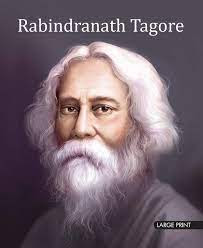
Rabindranath Tagore FRAS was an Indian polymath—poet, writer, playwright, composer, philosopher, social reformer and painter. He reshaped Bengali literature and music as well as Indian art with Contextual Modernism in the late 19th and early 20th centuries.


''THE POST MASTER'' SHORT STORY BY RABINDRANATH TAGORE

The story  post master is written by Rabindranath Tagore. he was a great story writer. The story is based on the condition of Ratan and the post master in the village Ulapur. In this story condition of Ratan was very pitiable because she was an orphan girl of the village. who did add jobs for post master. some time she remembered and said her father had been fonder of her than her mother. Ratan called to mind a little bother that she had and how one some by gone cloudy day. she had played at fishing with him on the edge of the Pond, with a twig for a fishing rod, such little incident would drive out greater events from her mind. Ratan was living alone because she was an orphan.

 The post master belonged to Calcutta and his The conduct of the postmaster towards Ratan that he come Ulapur that time HE FELT LIKE A FISH out of water in this remote village. There was one indigo Factory near by this village.Ratan called him "DADA". in this story Ratan said one dialogue which is very popular "did you called me dada".  The post master decides to leave  the village because, he missed his family and he had nor much work to do. His salary is small and nobody understands his feelings in this village. He does application for transfer but his health is not well.  when he was not well that time Ratan take care of him. The post master taught to Ratan in his free time. when the post mater leave the village that time, he gave his all salary to Ratan.  This story is popular because in this story Rabindranath Tagore has presented wonderful atmosphere about nature and rural people. In this story  relationship between the post master and Ratan is very close, warm and beautiful.

                                                                                                                               Thanks😊


U.G poem “ ode on solitude” by Alexander pope

                           Hello Friends,

As you all know that I am student of Maharaja Krushna Kumar Sinhji Bhavnagar University, so as a part of Digital Port folio what we did in under Graduate level. That we have to mention in the Port folio. so Here I would  like to mention my All poems, Novels, plays. which I studied from the Lokbharti Sanosara.

   "Ode on Solitude"

                                  BY ALEXANDER POPE

Happy the man, whose wish and care

   A few paternal acres bound,

Content to breathe his native air,

                            In his own ground.


Whose herds with milk, whose fields with bread,

   Whose flocks supply him with attire,

Whose trees in summer yield him shade,

                            In winter fire.


Blest, who can unconcernedly find

   Hours, days, and years slide soft away,

In health of body, peace of mind,

                            Quiet by day,


Sound sleep by night; study and ease,

   Together mixed; sweet recreation;

And innocence, which most does please,

                            With meditation.


Thus let me live, unseen, unknown;

   Thus unlamented let me die;

Steal from the world, and not a stone

                            Tell where I lie.


  ‘Solitude’ is the best stage of life. mostly people connects it with loneliness but it not about being lonely but it is about being happy in the company of our self. In this poem Pope says that the solitude is the blessed thing of life. The poem talks about the freedom of responsibility to the society and social norms. Pope talks about the joy of a person who is in his native land and not bounded or forced with the rules. The person should not be bounded by the rules of society and to answer the society.

In second stanza poet talks about the rights of the person and presents that how society interferes in the life of individuals. Relatives and society play a role of a barrier in the life of a person. A person should be free and when the person stops thinking about what society think, he is at the stage of solitude. The person should be free to think on his own, s/he does not need to satisfy all the expectation of society. Poet talks about the life of those who lives in a farm, have flocks and trees to shade them.

 By the third stanza, poet found that only those people can stay with happiness and talked about the life with good health and peace. These people do not care about the nagging and judgments of society. Those people do not need a lavish life for their enjoyment.

The people who are alone they do not need to care about what others think. The person with solitude has only the fear of his/her self only. Poet talks about his leisure life and ‘sound sleep’ with study and ease. He says that desire for knowledge is everything but a study without pleasure and ease is worthless. Society wants everyone to be educated but joy should be connected with it, otherwise it is of no use.

 In the final lines of poem poet wants the life of ‘unseen’ and ‘unknown’. He wants to hide himself from the world which gives pains and expects a lot. Thus the poem reflects the harsh reality of society and condition of an individual.


                                                      Thanks😊


U.G. POEM "BREAK BREAK BREAK" BY ALFRED LORD TENYSON

                       Introduction

 Alfred Tennyson, 1st Baron Tennyson FRS was an English poet.


 He was the Poet Laureate during much of Queen Victoria's reign and remains one of the most popular British poets. In 1829, Tennyson was awarded the Chancellor's Gold Medal at Cambridge for one of his first pieces, "Timbuktu"

"Break, Break, Break"

                                  BY ALFRED, LORD TENNYSON

Break, break, break,

         On thy cold gray stones, O Sea!

And I would that my tongue could utter

         The thoughts that arise in me.


O, well for the fisherman's boy,

         That he shouts with his sister at play!

O, well for the sailor lad,

         That he sings in his boat on the bay!


And the stately ships go on

         To their haven under the hill;

But O for the touch of a vanish'd hand,

         And the sound of a voice that is still!


Break, break, break

         At the foot of thy crags, O Sea!

But the tender grace of a day that is dead

         Will never come back to me.


“Break, Break, Break” 

The speaker addresses the waves of the sea, telling them to crash against the rocky shore again and again. Watching this happen, the speaker yearns for the ability to express troubling thoughts that won't go away.

Looking out onto the water, the speaker watches a fisherman's son yelling out while playing with his sister, as well as a young sailor who sings while sailing through the cove.

There are also impressive boats sailing through the bay, and the speaker envisions them passing into ideal, somewhat heavenly destinations. But watching these ships doesn't distract the speaker from the memory of touching the hand of an acquaintance who no longer exists, whose voice has gone silent forever.

Again, the speaker calls out to the waves as they smash against cliffs along the shoreline again and again, feeling that the easy happiness of previous days will never return.

                                                                                                                                                Thanks😊


                              .


U.G. POEM " A POISON TREE" BY WILLIAM BLAKE

                              Introduction 


William Blake was an English poet, painter, and printmaker. Largely unrecognised during his life, Blake is now considered a seminal figure in the history of the poetry and visual art of the Romantic Age.


"A Poison Tree"

                         BY WILLIAM BLAKE

I was angry with my friend; 

I told my wrath, my wrath did end.

I was angry with my foe: 

I told it not, my wrath did grow. 


And I waterd it in fears,

Night & morning with my tears: 

And I sunned it with smiles,

And with soft deceitful wiles. 


And it grew both day and night. 

Till it bore an apple bright. 

And my foe beheld it shine,

And he knew that it was mine. 


And into my garden stole, 

When the night had veild the pole; 

In the morning glad I see; 

My foe outstretched beneath the tree.


“ A POISON TREE” BY WILLIAM BLAKE


       "A Poison Tree" is a poem by English poet William Blake, first published in his Songs of Experience in 1794. In deceptively simple language with an almost nursery-rhyme quality, the speaker of the poem details two different approaches to anger. In the first, openly talking about anger is presented as a way of moving past it. In the second, the speaker outlines the danger of keeping anger within. The poem uses an extended metaphor to describe the speaker's anger as growing into a tree that bears poisonous apples. The speaker's enemy then eats an apple from the tree and dies. The poem is generally interpreted as an allegory for the danger of bottling up emotions, and how doing so leads to a cycle of negativity and even violence.


“A Poison Tree” Summary

The speaker recounts being mad at a friend. The speaker told their friend about this anger, which subsequently went away. By contrast, when the speaker was angry with an enemy, the speaker kept quiet. Their anger then increased.

The speaker cultivated this anger as if it were something planted in a garden, metaphorically nourishing it with fears and tears, both day and night. The speaker's smiles and other gentle deceptions used to hide the anger, in fact only fed the anger further.

The anger grew constantly until it became a tree, which bore a bright apple. The speaker's enemy saw this apple shining and knew it belonged to the speaker.

The enemy snuck into the speaker's garden during the dead of night. The next morning, the speaker is happy to see this enemy lying dead beneath the tree.

                                           Thanks😊


U.G. POEM “A Red, Red Rose” By Robert burns

                         Introduction 

Robert Burns, also known familiarly as Rabbie Burns, the National Bard, Bard of Ayrshire, the Ploughman Poet and various other names and epithets, was a Scottish poet and lyricist. He is widely regarded as the national poet of Scotland and is celebrated worldwide.


A Red, Red Rose

                        BY ROBERT BURNS

O my Luve is like a red, red rose

   That’s newly sprung in June;

O my Luve is like the melody

   That’s sweetly played in tune.


So fair art thou, my bonnie lass,

   So deep in luve am I;

And I will luve thee still, my dear,

   Till a’ the seas gang dry.


Till a’ the seas gang dry, my dear,

   And the rocks melt wi’ the sun;

I will love thee still, my dear,

   While the sands o’ life shall run.


And fare thee weel, my only luve!

   And fare thee weel awhile!

And I will come again, my luve,

   Though it were ten thousand mile.


“A Red, Red Rose”  by Robert burns


The speaker describes his or her love—meaning either the person the speaker loves or the speaker's feelings of love for that person—as being as beautiful, vivid, and fresh as a flower that has just recently bloomed. This love is as sweet as a beautiful song played by a skilled musician.

The beloved is so beautiful that the speaker loves her with a deep and strong passion—so strong, in fact, that the speaker's love will last until the oceans have become dry.

Even after the seas have evaporated and the earth has decayed, the speaker will still love the beloved. This love will endure until their own lives have ended and even until all human life has ended.

The speaker concludes by saying goodbye to the beloved—who is, the speaker reminds her, the only person the speaker loves. The speaker wishes her well during their temporary separation. The speaker reaffirms his or her faithful love by promising to return even if the journey covers a very long distance and takes a very long time.

                                                 Thanks😊


U.G. POEM ''DAFFODILS '' BY WILLIAM WORDSWORTH

                       Introduction 

William Wordsworth (7 April 1770 – 23 April 1850) was an English Romantic poet who, with Samuel Taylor Coleridge, helped to launch the Romantic Age in English literature with their joint publication Lyrical Ballads (1798).


Wordsworth's magnum opus is generally considered to be The Prelude, a semi-autobiographical poem of his early years that he revised and expanded a number of times. It was posthumously titled and published by his wife in the year of his death, before which it was generally known as "the poem to Coleridge". Wordsworth was Poet Laureate from 1843 until his death from pleurisy on 23 April 1850.


Title

The original title of the poem “I Wandered Lonely as a Cloud” is merely the first line of the poem. It is somewhat misleading, as it suggests that there is something about the poet’s loneliness in the poem. But the poem is all about the beauty of the daffodils and how they brought happiness to the poet. So some anthologists including Palgrave titled this poem as “Daffodils” or “The Daffodils” in their collections.

The poem is all about the beauty of nature. Wordsworth is often termed a nature-lover. And the Romantic Movement that he started with Samuel Tailor Coleridge is mainly characterized by the love and celebration of nature and beauty. This poem is a representative of Romanticism in English literature.


Structure


To talk about the structure of the poem, it is really very simple in form and language. Four stanzas of six lines each makes the entire poem 24 lines long. The rhyme scheme for each stanza is ABABCC, where the first (A)  and the second (B) lines rhyme with the third (A) and the fourth (B) respectively. These are followed by a rhyming couplet (CC). The poem is also rich in its use of figures of speech.


And finally, it’s a great example of a ‘real poem’, that is ‘a spontaneous overflow of powerful feelings’, as opined by the poet himself. As, the poem expresses the feelings of the poet himself, it is a subjective poem, one of the most important characteristics of Romanticism.


Daffodils:  poem 


Stanza 1


I wandered lonely as a cloud —

That floats on high o’er vales and hills,

When all at once I saw a crowd,

A host, of golden daffodils;

Beside the lake, beneath the trees,

Fluttering and dancing in the breeze.


The poet was travelling aimlessly just like a cloud over the hills and valleys of the mountainous Lake District in England. At that time, suddenly he came across a large number of golden daffodils beside the lake and under the trees. The flowers were ‘fluttering and dancing’ in the breeze.


The poet directly compares himself to a cloud, as he was wandering without aim, just like the clouds. This is an example of simile (Simile is a figure of speech where two things are compared using ‘as’ or ‘like’. Read more about figures of speech). He also uses the expressions like ‘crowd’ and ‘host’ to mean that he saw a large area covered with a whole lot of daffodils. In the last line, the poet personifies the flowers by saying that they were fluttering (like birds or butterflies) and dancing (like human beings). There is also an indication that it was a breezy day. So we get an overall idea of the landscape which includes the valleys and hills, the lake, the trees, the flowers beneath them and the breezy atmosphere.


Stanza 2


Continuous as the stars that shine

And twinkle on the Milky Way,

They stretched in never-ending line

Along the margin of a bay:

Ten thousand saw I at a glance,

Tossing their heads in sprightly dance.


Here is another Simile. The flowers are compared to the stars. They stretched in a continuous line just like the stars in a galaxy like the Milky Way. Moreover, the daffodils were shining (as they were golden in colour) and twinkling (as they were fluttering in the breeze) as the stars. This comparison with the stars may have a greater implication in indicating that the flowers are heavenly as the stars.


The flowers were visible as far as the poet could see along the shore-line of a bay. That is why he uses the phrase “never-ending line”. Here ‘continuous’ and ‘never-ending’ may also suggest that the flowers left an everlasting impact on him.


Wordsworth exaggerates the number of flowers by saying “Ten thousand saw I at a glance”. That indicates that the poet has never seen so many daffodils at once. So he is just overjoyed. This type of exaggeration is called hyperbole (exaggerated statements or claims not meant to be taken literally).


The poet also says that the daffodils were tossing their heads as if they were dancing in happiness. Actually the poet was amazed at the beauty of the flowers. So, he found everything around him joyful. All these references of dancing and tossing heads are parts of his personification of the flowers.


Stanza 3


The waves beside them danced, but they

Out-did the sparkling waves in glee:

A Poet could not but be gay,

In such a jocund company:

I gazed—and gazed—but little thought

What wealth the show to me had brought:


The waves in the bay were dancing and looking gleeful at the atmosphere. But the flowers outshone the lively waves in their happiness. Having such cheerful companion like the daffodils, a poet like Wordsworth cannot help being happy. So he was gazing constantly at the flowers and enjoying their beauty. The word ‘gazed’ is used twice to indicate how moved or charmed the poet was. So he gazed at them for a long time, forgetting his surroundings.


At that time, he did not think much about the ‘wealth’ that the flowers had brought to him. The poet realized that later, may be, after a few days. This ‘wealth’ is the happiness and the pleasant memory that he enjoyed for a long time since the day.


Stanza 4


For oft, when on my couch I lie

In vacant or in pensive mood,

They flash upon that inward eye

Which is the bliss of solitude;

And then my heart with pleasure fills,

And dances with the daffodils.


By starting this stanza with ‘For’, the poet continues his reasoning for saying that the flowers had brought him ‘wealth’. He clarifies why the sight of the flowers was so important in his life. Whenever he lies on his bed in a vacant or thoughtful mood, the daffodils flash upon his inner-eye, i.e., his imagination. The daffodils have become an everlasting memory for the poet, whenever he is lonely. So, he calls it ‘a bliss of solitude’, a blessing of staying alone.

And whenever he sees the flowers in his imagination, his heart fills with pleasure and his mind dances with the dancing daffodils. This shows the poet’s intense feelings. The poet has been able to depict the landscape and express his mind so vividly in so simple language and form, that really draws one’s attention. And that is why this poem has been one of the most read and mentioned subjective poems in the history of English literature.

                                                                               Thanks😊


U.G. POEM "I Had A Dove" [ Poem} By John keats

                                                 Introduction 

In spite of his early death in 1821 at the age of just twenty‑five, John Keats is regarded as one of the major figures of the English Romantic movement.


His reputation is based on fifty‑four published poems, in a range of poetic forms. In 1819, he produced five great odes, including ‘Ode to Autumn’. His development as a poet was remarkably rapid, as he mastered different poetic styles and produced work that was rich in imagery and allusions and communicated a sense of wonder at the human capacity to love and suffer.

Although he trained as an apothecary/surgeon, Keats devoted the last years of his life to poetry, in spite of financial difficulties and the increasing awareness that the tuberculosis he suffered would kill him. Keats’s passionate, sometimes desperate love for Fanny Brawne inspired many poems and letters. His literary ambitions and ill health, however, meant that they never married.

 " I Had A Dove Review" By John keats 

I had a dove and the sweet dove died;

And I have thought it died of grieving.

O, what could it grieve for? Its feet were tied,

With a silken thread of my own hand’s weaving;

Sweet little red feet! why should you die –

Why should you leave me, sweet bird! why?

You lived alone in the forest-tree,

Why, pretty thing, could you not live with me?

I kissed you oft and gave you white peas;

Why not live sweetly, as in the green trees?

The main idea of this poem is the loss of a loved person to the writer. This person could be someone closer to him or maybe an past love he has had. He speaks about something that escapes and he can’t keep near him, against his own wishes.

The structure of this poem is simple. It has an only stanza composed of ten verses. I can distinguish between two parts: the first part comprises the first four verses. Here the author introduces us to the poem and he let is us see the firsts questions and doubts which he will talk about throughout all the poem. The second one, until the last verse, he develops the rest of the story, proposing new questions and doubts, which he can’t answer. The last verse can be a general conclusion about the entire poem.

The rhyme is A-B-A-B-C-C-D-D-E-E.

This poem has no title. It has been taken the first verse to title it.

There are several verbal tenses that the poet uses in this poem. He uses past tenses when he speaks about the things that he did or he had and now he has missed it. Then he uses the conditional tense to ask the questions, like waiting for a change, with the hope to retrieve all this moments. When I read the poem the main feelings, which I have found, were melancholy, sadness, memories, missing… The author speaks about a dove that he had, and it died. He asks why the dove has died. He thinks that the dove could have died because of the grieve, but he also doesn’t know why the dove grieved. The poet grieved because the dove left him but he tries to understand why. He believes everything he did was polite, but even so the dove went away. So he doesn’t understand what happened.

Despite of that, the poem transmits always a positive impression. He personifies the love with a dove. This animal is the symbol of peace, it gives you a positive vision of his story even if this is a sad one. Also when he describes the dove he uses the adjective “sweet” or “pretty”. Here I can see how the author speaks about a loved person, maybe this person never was with him. When he compares it with the dove, he’s using a metaphor: this love flied like a dove. It can be the conclusion of the story. He tells also that he tried to tie the feet of the dove. This is another metaphor, he really tried to keep this person with him, but he failed, this person left him. The thread he used was made of silk, it’s an element in which I can see also his positive intentions, he didn’t want to hurt this person, he had always good purposes, but he couldn’t. The author see this loved person in the dove, white, pure, but free, and like the dove, this person went away, this person flied. When the poet speaks about the death of the dove, he refers to the end of the feeling of love for this person. Really this person didn’t die, just gave up to love him.

The poet is all the time regretting this left, in the 3rd verse he uses “O”, like a moan, maybe to praise. He believes that he makes everything right, I can tell this because the author writes how he took care of the dove: “I kiss’d you oft, and gave you white pease”. And he also utilizes often rhetorical questions, he knows he never gets an answer, but, in this way you can see how the author feels, he’s hopeless, this is his last attempt.

                                         conclusion 

In my opinion, the author really knows why this person left him, but he tries to hide it with the story of the dove. In the poem he believes that the dove, his love, died because of grieve. It can be produced because of him. He’s a little bit selfish, he wants to keep this person with him, but finally he has to accept the freedom of this person, the freedom of flying, as the dove does. With his rhetorical questions he asks why the dove prefers to live in the forest, in the trees than with him. Definitely he has to understand that this person never will be with him, this is the path that the dove has chosen, his platonic love, and he can do anything to change it, only cry.

                                                                                              Thanks😊 


Daily schedule Report Dated: 21/10/2024

  Daily schedule Report  Date: 21/10/2024  Monday  Hi! Good Morning Friends. By day, I would like to talk about my daily activities in...